
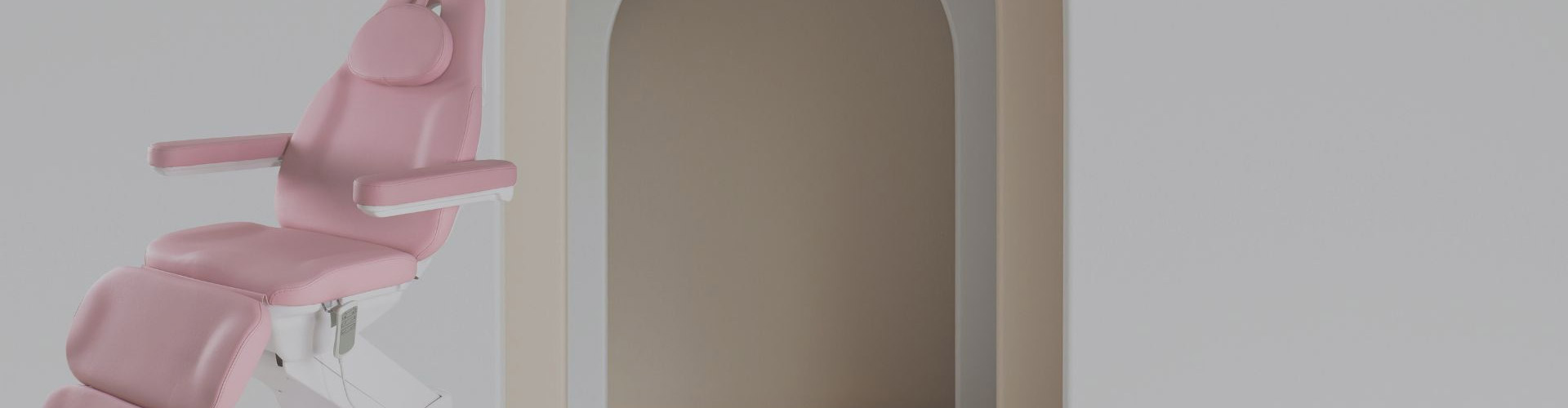
If you run a beauty studio in the U.S. — whether you’re focused on skincare, lashes/brows, head spa, or a multi-service concept — “looking good” in 2026 is no longer just a design preference. It affects your booking rate, your pricing power, and your repeat business. And the reason is simple: many clients “meet” your studio on their phone first.
According to Pew Research Center’s 2025 survey, social media use remains high among U.S. adults: Instagram (50%) and TikTok (37%) (with YouTube at 84% and Facebook at 71%). In real terms, your studio is often judged in a few seconds on video — before a client ever walks through the door.
At the same time, the market is leaning harder into wellness. The Global Wellness Institute reports the global wellness economy reached $6.8 trillion in 2024 and continues to grow. Beauty services are increasingly treated as part of self-care, which means clients also expect the space to feel more restorative, not just functional.
Below are the beauty studio styles you’ll see more often across the U.S. in 2026 — the ones that are easier for clients to accept, easier to film, and easier to run day to day. For each style, I’ll keep it practical: what it looks like, why it’s popular, and what types of studios and audiences it fits best.
Warm minimalism is still the safest “mainstream winner” for U.S. beauty studios in 2026. It’s not the old sterile white-and-gray look. It leans into creamy whites, soft beige tones, light wood, matte stone textures, and low-glare finishes, with small metal accents (champagne, brass, or soft chrome). The goal isn’t decoration — it’s creating a space that feels clean, calm, and professional. Clients tend to associate this look with good hygiene, organized service flow, and a higher-end experience.
A big reason this style stays popular is how well it performs on camera. The background looks tidy, skin tones read better, and your work doesn’t disappear into visual clutter. It’s also a style that doesn’t polarize; it works for almost any city and almost any price tier. Houzz’s 2026 trend coverage emphasizes design choices that feel warmer, more livable, and built for long-term comfort — which lines up with why warm minimalism keeps getting chosen by studio owners who can’t afford to redo interiors every year.
Best-fit studio scenario (buyer language): If you’re running a facial studio, skincare clinic, med spa consultation space, or a lash/brow studio where trust drives the sale, warm minimalism helps you look “legit” instantly. Even a small 1–3 room studio can feel more established. It’s the style that makes clients say, “This place looks professional — I’d feel safe here.”
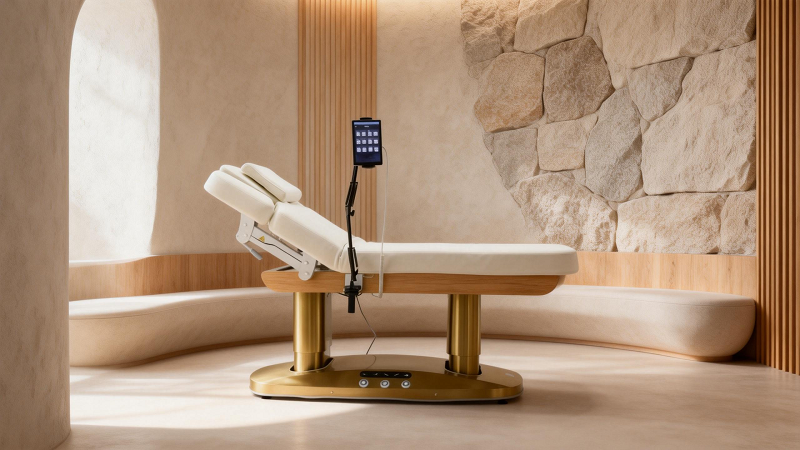
A wellness retreat style isn’t necessarily expensive, but it’s intentional about how people feel inside the space. You’ll see layered lighting (soft warm ambient + task lighting where needed), tactile surfaces (microcement finishes, warm wood, quiet textiles), and a layout that doesn’t feel like a hallway with a chair. The experience is slower, calmer, more “spa-like” — not rushed.
This style is gaining ground because the market is. When wellness spending is climbing, clients become more willing to pay for environments that feel restorative. The GWI’s $6.8T wellness economy figure is a clear macro signal: people are spending more on feeling better, not just looking better. In the U.S., you can see this clearly in head spa and relaxation-based services — the interiors are becoming part of the value.
Best-fit studio scenario (buyer language): If you offer head spa, scalp treatments, massage-style services, lymphatic work, or longer high-ticket facials, this look can support premium pricing because it visually matches the promise. Clients aren’t only comparing menus anymore — they’re comparing the feeling. They book the place that looks like it’ll help them exhale for an hour.
Neo Deco is one of the easiest 2026 trends to justify with public signals. Pinterest Predicts 2026 specifically calls out Neo Deco, backed by search growth tied to the look — including terms like “antique bar cart (+100%),” “red marble bathroom (+80%),” “pendant lamp (+40%),” and “brass aesthetic (+35%).” In plain words: people are actively searching for polished, geometric, slightly glamorous details again.
In beauty studios, Neo Deco works because it creates an immediate “premium” impression — without turning your space into a cold clinic. It’s also naturally content-friendly: symmetry, brass edges, statement mirrors, and clean geometry photograph well. The smartest version of Neo Deco usually shows up as one signature zone: a reception wall, a logo backdrop, or a product display area — not as a whole-store theme.
Best-fit studio scenario (buyer language): If you’re in a competitive area where clients are choosing between multiple med spas, skin clinics, and lash studios, Neo Deco helps you stand out fast. It’s for owners who want the space to feel more “institution-level” and price-confident — the kind of place that looks expensive even before clients ask what you charge.
Afrohemian is another 2026 trend with measurable demand signals. Pinterest Predicts 2026 names Afrohemian decor and shows strong search growth related to the aesthetic — including “afrobohemian home decor (+220%),” “motif berbere (+210%),” and “adire fabric (+130%).” The style blends African-inspired textiles and craft detail with boho warmth: woven textures, natural fibers, patterned fabrics, curated art, and richer earthy tones.
In the U.S. beauty market, this look performs best when you’re building a brand with personality. It makes a studio feel like it has a point of view. The client experience becomes less “generic service” and more “this place has a vibe.” That can be incredibly valuable in neighborhoods where clients want something personal, local, and Instagrammable — but not cookie-cutter.
Best-fit studio scenario (buyer language): If you’re a boutique studio owner — the kind of person who wants clients to remember your space, talk about it, and feel like they discovered something — Afrohemian supports that. Just keep the operational reality in mind: texture can’t become clutter. The “high-end version” of this style is the one where your work zones stay clean and organized, and the personality lives in curated moments.
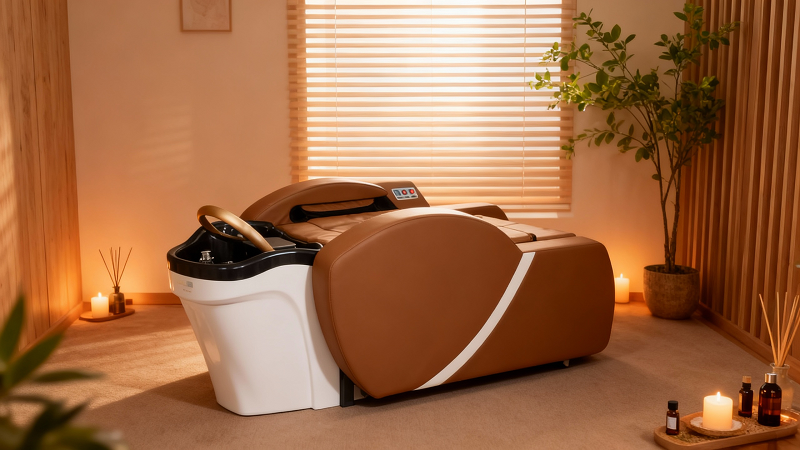
After-dark glam isn’t about making your whole studio dark. It’s about building one powerful visual identity moment. Pinterest Predicts 2026 highlights an “after-dark” beauty direction, with strong growth in related searches like “dark romantic makeup (+160%)” and “gothic coffin nails (+180%)” — signals that moodier, dramatic beauty aesthetics are rising. That shift doesn’t stay confined to nails or makeup; it influences studio interiors because content is filmed inside the space.
In practical studio design, the best move is to create a single after-dark corner: a moody mirror zone, a branded wall, a filming corner, or a dramatic waiting nook — while keeping service stations bright, clean, and high-visibility. That way you get the content advantage without sacrificing real-world usability.
Best-fit studio scenario (buyer language): If your audience is younger, style-driven, and you grow through TikTok/Instagram reels, a signature after-dark moment helps people remember you. Clients will literally say, “I saw that wall / mirror / corner online — I want a photo there.” But the space still has to feel spotless, so storage and quick reset matter even more with darker finishes.
In 2026, color strategy is moving beyond “all neutrals.” The practical approa
https://www.houzz.com/magazine/25-home-design-trends-defining-how-well-live-in-2026-stsetivw-vs~183837788
ch is adding controlled color to build recognition — without trapping yourself in a look you’ll regret in 12 months. Pinterest has published its Pinterest Palette 2026 (Cool Blue, Jade, Plum Noir, Wasabi, Persimmon) as a trend color forecast based on platform insights. For studio owners, the value isn’t copying the palette literally. It’s understanding what these colors communicate.
Cool Blue and Jade tend to read clean, calm, wellness-forward. Plum Noir supports a moodier premium look. Wasabi and Persimmon work best as accents — a backdrop wall, a retail shelf zone, a detail behind reception — when you want energy and memorability. Done right, color becomes your branding shortcut: clients recognize you instantly in photos.
Best-fit studio scenario (buyer language): If you’re in a saturated market and you need a recognizable “signature,” color accents can do more than decor ever will. It’s the difference between “another nice studio” and “oh, that’s that studio.”
If there’s one honest summary of what’s trending in U.S. beauty studios for 2026, it’s this: spaces are becoming warmer, more wellness-led, more camera-friendly, and more grounded in day-to-day practicality. You don’t have to chase every trend. A smart approach is choosing a reliable base style (warm minimalism or wellness retreat) and adding one memorable feature (Neo Deco reception moment, Afrohemian texture story, After-Dark content corner, or a Pinterest Palette color accent). That’s how studios earn attention online without sacrificing the real client experience.
If you’re publishing this on dpbeautyfurniture.com, you can naturally connect the ideas to real setup choices: treatment beds and chairs that match a clean premium look, storage and trolleys that keep stations photo-ready, and reception pieces that create a strong first impression. The key is keeping the article useful — readers should feel like you’re helping them make smarter decisions, not pushing product.


"*" indicates required fields


