
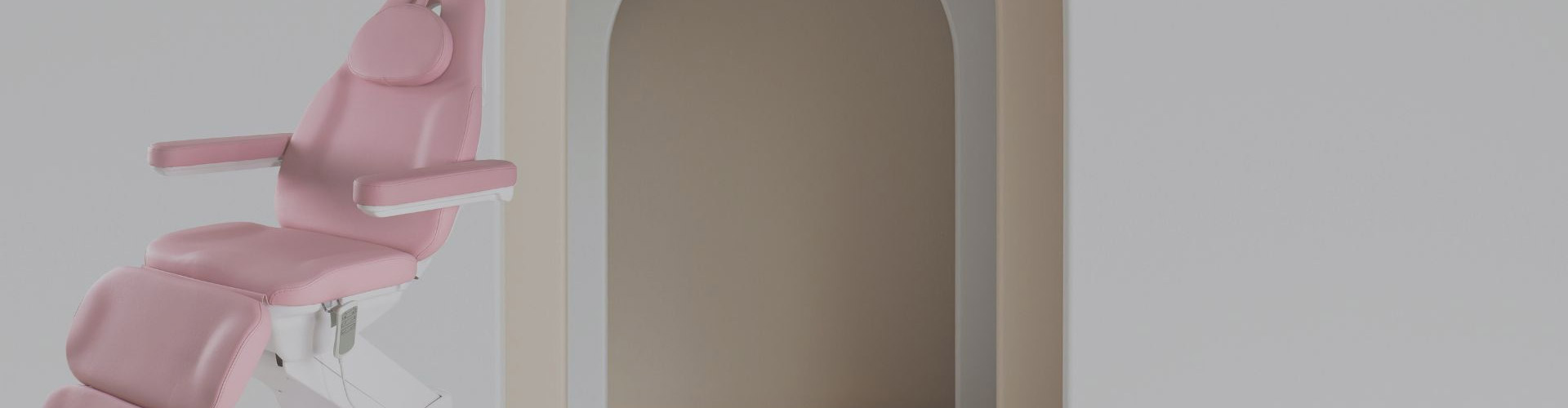
The landscape of the global aesthetic industry is currently undergoing its most significant structural shift in half a century. We are moving away from an era of "surface-level vanity" and into a decade defined by "Biological Longevity." For business owners in the MedSpa, salon, and wellness sectors, understanding this evolution is no longer optional—it is the baseline for professional relevance.
For decades, beauty treatments and therapeutic sessions were categorized as "luxuries"—occasional splurges reserved for special events or rare moments of indulgence. The relationship was transactional: a client paid for a specific aesthetic result, such as a facial or a body contouring session, and viewed the experience as a discrete, non-essential event.
Today, that paradigm has shifted. We are witnessing a Cognitive Leap. In the post-2024 landscape, beauty treatments are being reframed as an integral component of long-term health management.
The Core Shift in PerceptionThe modern consumer is no longer satisfied with "skin-deep" results. There is a growing realization that the skin is not a separate entity but the body’s largest organ and a mirror of the internal nervous system. Today’s clients are seeking more than just a glow; they are pursuing nervous system regulation, chronic fatigue repair, and psychological decompression. They are looking for a sanctuary where the physiological effects of a high-stress, digital-first lifestyle can be reversed.
To comprehend why premium equipment is no longer a luxury but a strategic necessity, one must examine the macroeconomic engines driving the modern consumer. We are not merely seeing a "trend"; we are witnessing a permanent reallocation of global household wealth toward longevity and health maintenance.
According to the
What does this mean for the facility owner? It signifies that "Wellness" has overtaken "Luxury Goods" as the primary status symbol. Consumers are shifting their discretionary spending away from designer apparel and toward "Biological Assets"—their skin, their sleep quality, and their stress resilience.
Within this multi-trillion-dollar landscape, Mental Wellness has emerged as the second-fastest-growing sector, expanding at 12.4% annually.
The "Stress-Sensing" Consumer: As urban professionals grapple with digital burnout, they are seeking "Third Spaces" that offer sensory deprivation and nervous system resets.
The Infrastructure Connection: Data from the Global Wellness Summit suggests that the environment's physical comfort is the #1 cited factor in a client’s ability to "switch off" during a treatment. If a treatment bed is noisy, narrow, or lacks ergonomic contouring, it actively sabotages the mental wellness ROI the client is paying for.
The term "anti-aging" is officially being retired in favor of "Skin Longevity." This isn't just a marketing pivot; it is a scientific one. As noted in
Extended Treatment Times: Longevity protocols—such as regenerative facials combined with lymphatic drainage—often require sessions lasting 90 to 120 minutes.
The Comfort Gap: In a 120-minute session, the quality of the padding and the support of the cervical spine become "clinical variables." A client in physical pain cannot experience cellular regeneration effectively due to the systemic inflammation caused by discomfort.
In the 2025-2026 fiscal cycle, Millennials and Gen Z have officially become the dominant spenders in the wellness sector, contributing over $2 trillion globally.
The "Optimizer" Persona: These generations are "Maximalist Optimizers." They utilize wearables to track their heart rate variability (HRV) and cortisol.
High Expectations: They are hyper-aware of the "Experience Economy." They expect a facility to be an Instagram-worthy sanctuary that feels as high-tech as their personal devices. For a clinic, this means that outdated, manual-adjust furniture acts as a "Trust Tax," subtly signaling to a savvy younger client that your practice may not be at the cutting edge of science.
To build a successful wellness business, owners must move beyond the "what" and understand the "why." Why are people more obsessed with health and longevity now than at any other point in history?
We are living through a global "Stress Epidemic." Current data suggests that over 50% of urban professionals identify as being in a state of moderate to severe daily stress. This prolonged exposure to adrenaline and cortisol has created a desperate need for Nervous System Regulation. In this context, a beauty clinic is no longer just a place for a facial; it is a "Third Space"—a buffer between the demands of work and the responsibilities of home. Clients are visiting these spaces specifically to down-regulate their fight-or-flight response.
The American healthcare narrative is shifting from "reactive" (treating sickness) to "proactive" (preserving health). Consumers are increasingly realizing that "Prevention is the only true cure." Beauty and wellness centers are evolving into Recovery Hubs. The consumer's goal is to maintain their physical and mental "uptime," much like a high-performance athlete focuses on recovery to ensure peak performance.
Science is finally catching up with ancient wisdom. Clinical studies have shown that professional therapeutic touch triggers the release of oxytocin (the "bonding hormone") while significantly lowering cortisol (the stress hormone). However, there is a catch: The body only releases these beneficial chemicals if it feels physically safe and supported. If a client's body is "guarding" against an uncomfortable surface or a cold, sterile environment, the nervous system remains on high alert, and the biological benefits of the treatment are halved.
This is where the macro-trends of the global economy meet the micro-reality of your treatment room. For a business to succeed in this new era, its philosophy must be reflected in its physical infrastructure. At DP Beauty, we believe that the furniture in a clinic is not a "static object"—it is a clinical tool that either facilitates or obstructs the healing process. When we look at the role of furniture through the lens of modern wellness, three key pillars emerge:
Therapy is, at its core, the architecture of support. A treatment bed should not be a simple flat surface; it must be an ergonomic interface.
The Science: Using high-density, multi-layer memory foam, a bed can perform "Body Mapping," distributing the client's weight so that no single joint or muscle group is under tension.
The Result: When the physical body is perfectly supported, the brain can "let go." Research suggests that a truly ergonomic surface can help a client reach a state of deep relaxation within the first 15 minutes—maximizing the efficacy of whatever treatment follows.
In a high-end MedSpa, Stability equals Trust. * Smooth Motion: Modern electric treatment beds utilize whisper-quiet motors that allow for "invisible adjustments." In the past, if a practitioner needed to adjust the height of a bed, it was a jerky, noisy experience that jolted the client out of their "flow state."
Multi-functional Versatility: As wellness centers expand into physical therapy and somatic release, furniture must adapt. Whether it is a
Environmental psychology teaches us that our surroundings are "hormonal triggers." A cluttered, noisy, or cheaply furnished room induces a "micro-stress" response.
Hedonic Well-being: By utilizing minimalist, high-end designs, a clinic can induce "Hedonic Well-being"—a state of sensory pleasure that lowers heart rate.
The Sanctuary Effect: DP Beauty’s furniture is designed to be "visually quiet." By using medical-grade, BPA-free, and Phthalate-free materials, we ensure that the environment is not only aesthetically pleasing but also biologically clean, free from the volatile organic compounds (VOCs) that degrade air quality in small treatment rooms.
As we look toward the 2030s, the "Wellness Economy" will no longer be a trend—it will be the baseline. The businesses that thrive will be those that recognize that health and beauty are now the same thing.
In this new landscape, your hardware is your "Brand's Silent Ambassador." Investing in high-quality, ergonomically engineered furniture is not just about comfort; it is a strategic investment in client trust and brand premiumization. You cannot charge luxury prices for a transformational health experience if your client is lying on a bed that creates physical stress.
At DP Beauty, we have spent decades bridging the gap between "Health Engineering" and "Luxury Aesthetics." We are committed to helping practitioners around the world transition from "service providers" to "healing facilitators." Every motor, every layer of foam, and every curve of our furniture is designed with a single goal: to help your client’s body say "yes" to the treatment.
The future of the beauty industry is deep, it is scientific, and it is founded on the principle of holistic care. Is your facility built to support the future, or is it still stuck in the past?
The foundation of every great treatment is the platform it happens on. Let us help you align your facility with the next decade of wellness.


"*" indicates required fields


