
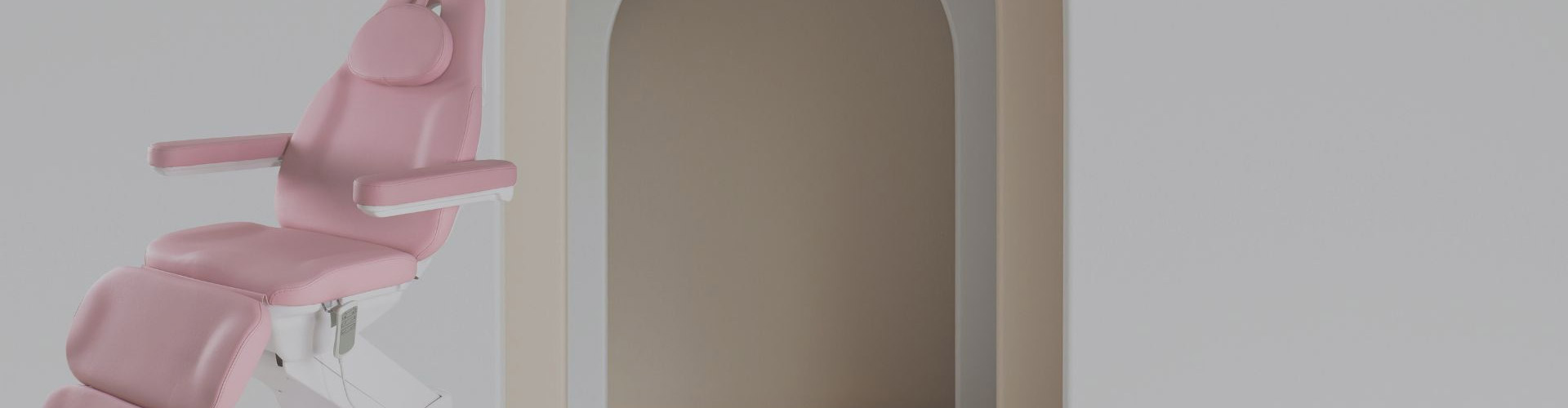
In the premium beauty and medical aesthetics industry, your interior design is not merely a "wrapper" for your services; it is a critical business asset. A poorly designed space creates "friction"—technicians get tired faster, clients feel exposed rather than relaxed, and the brand’s perceived value drops.
To create a space that truly resonates, one must move past the "Instagram-friendly" facade and into the realm of Integrated Design. This means every aesthetic choice must have a functional justification, and every functional necessity must be executed with aesthetic grace.
The foundation of a high-performing salon lies in its floor plan. Many owners make the mistake of maximizing the number of treatment rooms at the expense of the "Client Psyche."
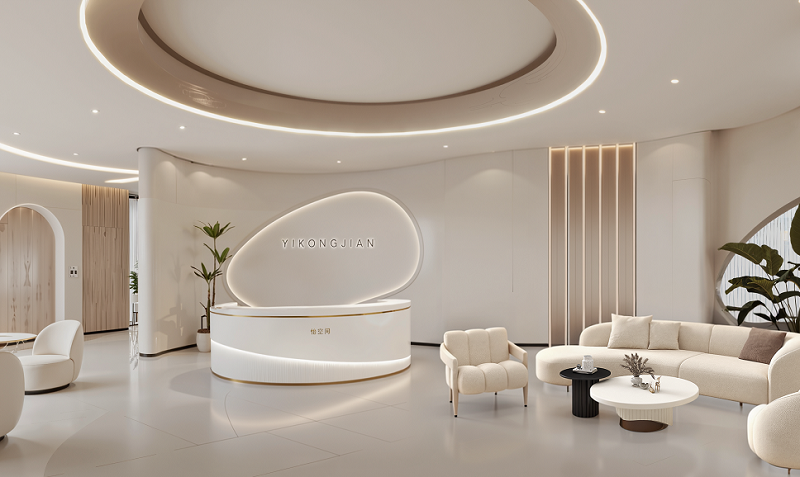
A professional salon should be treated as a theatrical production with "Front of House" and "Back of House" dynamics.
The Transition Threshold: The entrance shouldn't just be a door; it should be a sensory "airlock." Designing a curved entryway or a soft-lit foyer helps clients physically and mentally drop the stress of the street before they even reach the reception desk.
Acoustic Buffer Zones: Functionally, you cannot have a noisy espresso machine in the reception area clattering while a client is getting a facial 2 meters away. Use "buffer zones"—such as a retail display wall or a consultation room—to act as a sound barrier between the high-energy lobby and the low-energy treatment corridor.
If your staff is uncomfortable, your service quality will suffer. We treat the treatment room like a cockpit:
The 360-Degree Clearance: A common mistake is pushing the beauty bed against a wall to save space. Functionally, a therapist needs at least 60-80cm of clearance around the head and sides of the bed to perform lymphatic drainage or use advanced aesthetic machinery without straining their back.
The Plumbing Paradox: Sinks are a functional must-have in every room for hygiene compliance, but they are often eyesores. The "Integrated" solution? Custom-built cabinetry that mimics a high-end vanity, concealing the pipes while providing an easy-to-clean, seamless surface.
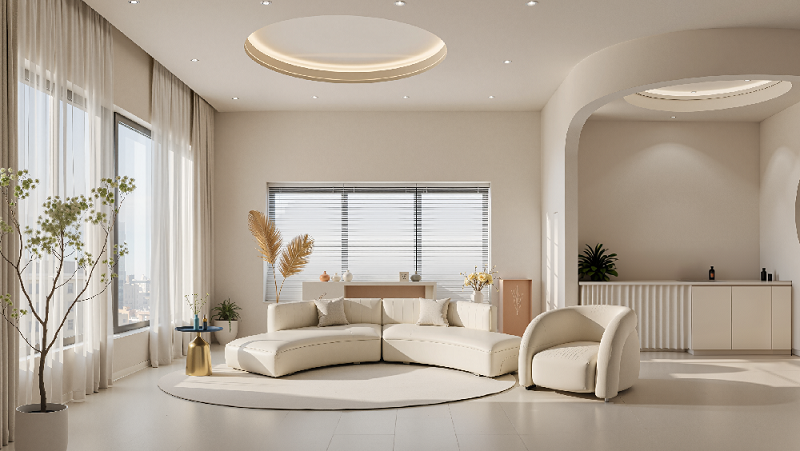
Lighting in a beauty salon is a complex technical challenge. You need "Mood Lighting" to sell the dream, but "Task Lighting" to see the skin.
Ambient Layer (The Emotion): Avoid the "Office Grid" of overhead LED panels. Instead, use indirect lighting—LED strips hidden in ceiling coves or behind wall panels. This bounces light off surfaces, creating a soft, shadowless glow that mimics natural dusk, the time when humans are biologically wired to relax.
Task Layer (The Precision): When performing extractions or laser treatments, the technician needs high-intensity light. The aesthetic solution is to use "Articulated Architectural Lamps" that look like design pieces but offer 5000K (daylight) color temperatures.
The "Hero" Mirror Layer: Every client checks themselves in the mirror post-treatment. If you have "Top-Down" lighting, it creates dark shadows under the eyes—making the client feel they look tired. The functional fix? Vertical Side Lighting or "Halo Mirrors" that provide even facial illumination, ensuring the client leaves feeling beautiful.
In a beauty environment, CRI is non-negotiable. Always specify bulbs with a CRI of 95 or higher. Low CRI lighting (typical in cheap LEDs) makes skin look grey or sickly green. High CRI ensures that the "glow" your treatment just produced is actually visible to the client.
In beauty design, the materials you choose must survive a "War Zone" of chemical peels, massage oils, and medical-grade disinfectants, yet they must feel like a luxury hotel.
Flooring Longevity: While real hardwood is beautiful, it warps with steam and stains with oil. The professional choice is Large-Format Sintered Stone or Luxury Vinyl Plank (LVP) with a 20mil wear layer. These materials provide the aesthetic of natural wood or marble but are non-porous and can be "flash-coved" up the wall for a 100% sterile seal.
Surface Tension: Use non-porous surfaces like Quartz or Solid Surface (Corian) for mixing stations. Unlike granite or marble, these won't absorb pigments from brow tints or chemical neutralizers.
Softness as a Service: To prevent the "Clinical Coldness," integrate high-performance fabrics. Modern "Performance Velvets" are bleach-cleanable but offer a tactile softness that signals "comfort" to the client's nervous system.
The most expensive aesthetic machine in the world loses its "magic" if it’s sitting on a wobbly plastic cart next to a dated, creaky bed.
Stop viewing your beauty beds as equipment; view them as the centerpiece of an interior "scene."
Integration of Technology: Choose beauty beds with hidden motors. The sight of exposed pistons and messy power cords creates visual "noise." A streamlined, fully upholstered electric bed (like those seen in DP Beauty Furniture’s scene-matching collections) acts as a sculptural element in the room.
The Consultation Stage: The consultation is where the sale happens. Instead of a standard office desk, which creates a "Teacher-Student" hierarchy, use a round "Dialogue Table" with soft, ergonomic armchairs. This functional shift in furniture layout fosters a partnership feeling between the consultant and the client, increasing treatment upsell rates.
True interior design involves the senses that the eyes cannot see: Sound, Smell, and Temperature.
A "beautiful" room is ruined if you can hear the toilet flush next door or the receptionist talking on the phone.
Functional Fix: Install Solid-Core Doors (not hollow ones) and use drop-down acoustic seals at the bottom of the door.
Aesthetic Integration: Use "Acoustic Art"—sound-absorbing panels wrapped in high-end linen or printed with abstract art—to prevent echoes in rooms with hard floors.
The smell of "disinfectant" is functional, but it triggers "Doctor Office Anxiety."
The Strategy: Use a HVAC-integrated scenting system. The reception should smell of "Signature Luxury" (e.g., White Tea or Sandalwood), while the treatment rooms should be "Neutral-Fresh" to avoid clashing with the scents of the products used during the service.
Clutter is the enemy of both beauty and function. A room filled with boxes of cotton pads and tangled wires is impossible to keep sterile and impossible to enjoy.
Recessed Wall Niches: Instead of floating shelves (which collect dust), design recessed niches with integrated LED lighting. This turns your retail products into "Art Installations" while keeping them off the precious floor space.
Appliance Garages: Design cabinetry with "flip-up" doors and internal power outlets. Your steamers, wax heaters, and towel warmers should stay plugged in and ready to work inside the cabinet, but be completely invisible when the door is closed. This is "Visual Silencing"—reducing the mental load on both the client and the therapist.
Why does all this matter? Because in 2026, the User Experience (UX) of a physical space is your most powerful marketing tool.
Social Currency: When a space is perfectly balanced, clients will naturally take photos. A well-lit "Selfie Corner" with your brand’s logo and a texture-rich background (like a moss wall or fluted wood panel) is a functional lead-generation tool.
Price Elasticity: Clients do not complain about high prices in a space that feels "High-Value." If the chair they sit in feels expensive, and the lighting makes them look younger, the price of the service becomes secondary to the feeling of the experience.
To recap, if you are planning a renovation or a new build, ask yourself these three "Audit Questions":
Does the flow allow my staff to work without crossing paths or over-reaching? (Efficiency)
Does the lighting protect the client’s comfort while highlighting my work’s precision? (Experience)
Do my materials tell a story of luxury while meeting the reality of hygiene? (Durability)
The most successful beauty salons of the future will not be those with the most expensive machines, but those that have mastered the "Scene Matching" between their furniture, their architecture, and the human soul.


"*" indicates required fields


