
Choosing a shampoo bed is not just about picking the most expensive model or the one with the most functions. For a salon, spa, or head spa studio, the right shampoo product should match your service menu, room layout, client comfort level, daily usage, and maintenance expectations.
Today, buyers can choose from many different types of shampoo products: basic salon shampoo chairs, reclining shampoo beds, electric shampoo beds, massage shampoo beds, head spa beds, and full head spa systems. Each one serves a different business purpose.
This guide will help you understand the main differences and choose the right shampoo solution for your salon or beauty business.
The first question is simple: what services will this shampoo bed support?
If your business is mainly a hair salon or barbershop, you may only need a practical shampoo chair or standard shampoo bed. These products are designed for frequent hair washing, rinsing, color service support, and daily salon use. They are usually easier to install, easier to maintain, and more cost-effective for high-traffic shops.
If your business offers head spa, scalp care, hair treatment, relaxation services, or premium beauty treatments, a reclining shampoo bed or head spa bed may be a better fit. These products allow clients to lie down more comfortably for longer sessions and help create a more relaxing service experience.
If your business focuses on luxury spa services, Japanese head spa, or wellness-style treatments, you may want to consider a shampoo bed with massage, water circulation, steam, or other upgraded functions. These features can help support a higher service price and create a more memorable customer experience.
A standard shampoo chair is the most common option for traditional hair salons. It usually includes a seat, backrest, ceramic basin, faucet, and drain system.
This type is suitable for salons that need a simple, stable, and affordable washing station. It is especially useful when customers are only staying at the shampoo area for a short time.
Best for:
-Hair salons
-Barbershops
-Budget-conscious salon owners
-High-frequency washing areas
-Wholesale and bulk purchasing
Main advantage: practical and easy to use.
Main limitation: not designed for long head spa or relaxation treatments.
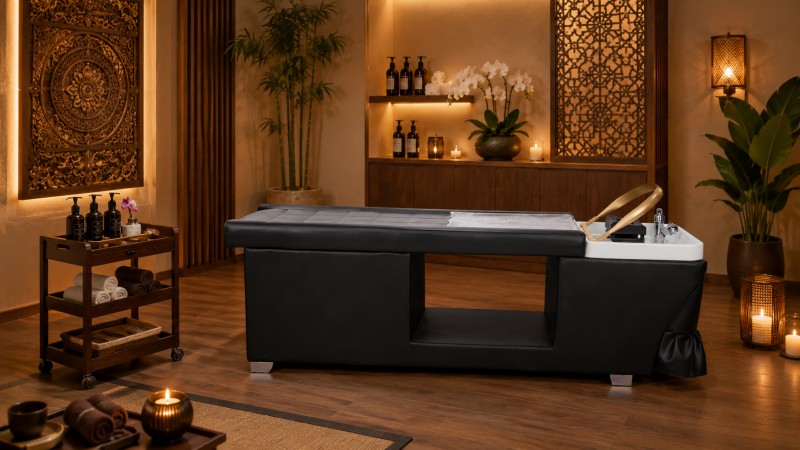
A reclining shampoo bed gives the client a more relaxed lying position compared with a standard shampoo chair. The seat and backrest are usually longer, making it more comfortable for longer washing or scalp care services.
This type works well for salons that want to upgrade the customer experience without moving into a full head spa system.
Best for:
-Beauty salons
-Hair treatment rooms
-Scalp care services
-Small spa rooms
-Mid-range salon upgrades
Main advantage: better comfort and a more premium look.
Main limitation: requires more floor space than a standard shampoo chair.
An electric shampoo bed allows the backrest, legrest, or height to be adjusted by motor. This makes it easier for staff to position the client and can reduce strain during longer services.
For salons with mixed services, an electric model can be useful because it gives more flexibility. Some clients may prefer a semi-reclined position, while others may need a flatter lying position.
Best for:
-Premium salons
-Head spa studios
-Beauty salons with long treatment sessions
-Businesses that want easier positioning
-Studios serving different client body types
Main advantage: flexible positioning and better staff efficiency.
Main limitation: higher cost and more electrical parts to maintain.
A massage shampoo bed is designed to add extra relaxation during the washing or head spa process. Depending on the model, the massage may be located in the backrest, waist area, seat area, or full body section.
This type is not necessary for every salon, but it can be valuable when the business wants to sell a more premium service experience.
Best for:
-Head spa studios
-Luxury hair salons
-Wellness salons
-SPA and beauty centers
-Businesses focused on relaxation services
Main advantage: stronger comfort and experience-based selling point.
Main limitation: higher price and more complex after-sales support.
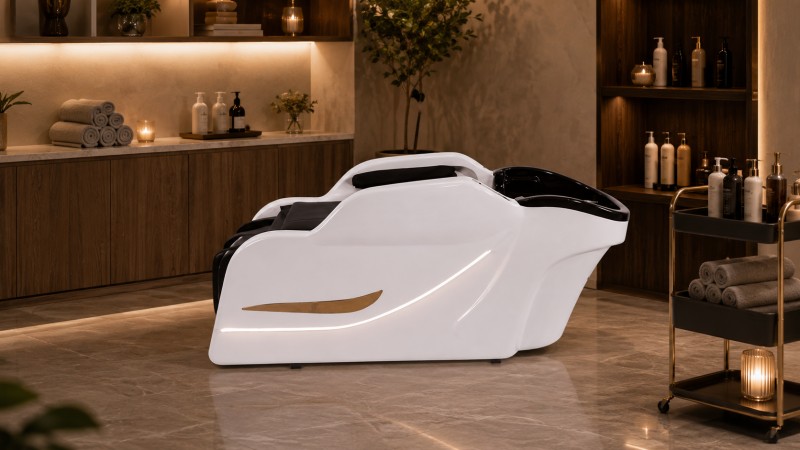
A head spa bed is designed for scalp care and longer relaxation services. Some models include water circulation, steam, scalp treatment support, waterfall-style rinsing, or a special basin design for lying-down service.
This type is usually not just a “shampoo bed.” It is part of a service concept. The business needs to think about treatment flow, water connection, drainage, room design, towels, product storage, staff training, and the full customer experience.
Best for:
-Japanese head spa studios
-Scalp care centers
-Luxury beauty salons
-Wellness spaces
-Businesses creating a new high-ticket service
Main advantage: strong service value and social media appeal.
Main limitation: requires more planning, staff training, and installation preparation.
How long will your client stay on the shampoo bed?
If the service takes 5 to 15 minutes, a standard shampoo chair or simple shampoo bed is usually enough. The client only needs basic comfort and neck support.
If the service takes 20 to 45 minutes, a reclining shampoo bed is more suitable. The client needs better body support and a more relaxed position.
If the service takes 60 to 90 minutes, especially for head spa or scalp treatment, comfort becomes much more important. In this case, a head spa bed, electric shampoo bed, or massage shampoo bed may be a better choice.
A simple rule:
Short washing service: choose practical and durable.
Medium treatment service: choose better comfort.
Long head spa service: choose full-body support and premium experience.
Before choosing a shampoo product, measure the room carefully.
A standard shampoo chair usually needs less space and can work well in a row layout. This is suitable for busy hair salons.
A reclining shampoo bed needs more length, especially when the client is lying down. You should leave enough room for the staff to walk around, adjust the faucet, handle towels, and clean the basin area.
A head spa bed may need even more space because the service often includes carts, scalp care products, towels, steam equipment, lighting, and sometimes a more private room setting.
Before buying, check:
-Total product length
-Width with armrests
-Space behind the basin
-Staff working space
-Water inlet and outlet position
-Power outlet position
-Distance from wall
-Client entry and exit path
Do not only look at the product size. Think about how the product will be used during a real service.
Many buyers ask: should I choose a shampoo bed with massage or without massage?
The answer depends on your business model.
If your salon focuses on daily hair washing, color rinsing, and basic hair services, a non-massage shampoo bed is usually more practical. It is easier to maintain, more affordable, and better for high-frequency use.
If your salon sells head spa, scalp care, luxury shampoo service, or relaxation packages, a massage shampoo bed can help create a stronger customer experience. It gives the client one more reason to choose a premium service.
Choose non-massage if you care more about:
Lower purchase cost
Lower maintenance pressure
Simple operation
High daily usage
Bulk purchasing
Easy after-sales service
Choose massage if you care more about:
-Premium client experience
-Higher service pricing
-Head spa positioning
-Relaxation-focused treatments
-Social media content
-Luxury salon branding
For most B2B buyers, a good product strategy is to offer both options: non-massage models for practical salon use, and massage models for upgraded head spa or premium spa services.
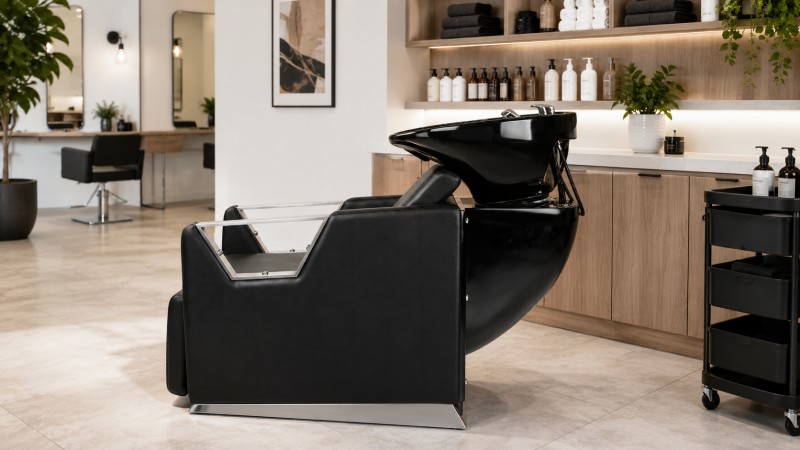
The basin is one of the most important parts of a shampoo product.
A good basin should support easy rinsing, comfortable neck positioning, and smooth drainage. If the neck position is uncomfortable, even a beautiful shampoo bed can create a bad service experience.
Look for:
--Smooth ceramic or durable basin material
-Comfortable neck curve
-Enough basin depth
-Easy-to-clean surface
-Suitable faucet position
-Stable drainage design
-Water splash control
For longer head spa services, neck comfort becomes even more important. The client may lie there for 30 minutes or longer, so the neck area should not feel too hard, too high, or too narrow.
Salon shampoo products are used in wet environments. Water, shampoo, hair color, cleaning chemicals, and daily friction can all affect the product over time.
For upholstery, choose material that is water-resistant, easy to clean, and suitable for commercial use. PU leather is commonly used because it is easier to wipe and maintain. For higher-end products, thicker padding and better stitching can improve comfort and appearance.
For the frame, look for stable structure and strong support. A shampoo bed should feel solid when the client lies down or gets up.
For the basin area, easy cleaning is very important. Hair, product residue, and water stains can build up quickly in salon environments.
Good material choices can reduce daily cleaning pressure and help the product keep a professional look for longer.
A shampoo product should not only be comfortable for the client. It should also be practical for the stylist or therapist.
Staff need to wash, rinse, massage, dry, adjust towels, apply treatments, and clean the station after each client. If the product height or position is uncomfortable, staff may experience back, shoulder, or wrist strain over time.
For longer services, electric adjustment can help. For standard salons, correct basin height and enough working space may be more important than advanced functions.
Before choosing, think about:
-Can the staff reach the client’s head easily?
-Is the basin too low or too high?
-Is there enough space to move around?
-Can towels and tools be placed nearby?
-Is the product easy to clean between clients?
-Can the staff operate the controls easily?
A good shampoo bed should support both client comfort and staff efficiency.
Some shampoo products are simple to install. Others require more planning.
A basic shampoo chair may only need water inlet, drainage, and stable floor placement. A full head spa system may require water pressure checks, drainage planning, electrical outlets, water tank cleaning, steam function maintenance, or regular pump inspection.
Before placing an order, ask the supplier:
-What water connection is required?
-Does it need hot and cold water?
-Is drainage included?
-Does it need a special power outlet?
-Are replacement parts available?
-How should the basin and pipes be cleaned?
-What parts are covered by warranty?
-Can the supplier provide installation guidance?
For wholesale buyers, maintenance is even more important. A model that looks attractive but is difficult to repair may create pressure after delivery. Stable structure, available parts, and clear after-sales support are key factors.
Different shampoo products support different business positioning.
If your salon offers affordable hair services, choose a practical model with stable quality and easy maintenance.
If your salon offers mid-range services, a reclining shampoo bed can help improve the customer experience without making the investment too high.
If your salon offers high-end head spa or scalp treatment, a massage shampoo bed or full head spa system can support a higher service price.
A higher-priced product only makes sense when it helps your business earn more, improve service quality, or attract the right customers.
Choose a standard shampoo chair or simple shampoo bed. Focus on durability, easy cleaning, basin comfort, and price control.
Recommended features:
Ceramic basin
Comfortable neck support
Easy-clean upholstery
Stable frame
Simple water connection
Choose compact and durable shampoo units. Space efficiency is important, especially for smaller shops.
Recommended features:
Compact size
Strong structure
Easy cleaning
Simple design
Cost-effective price
Choose a reclining shampoo bed if you want a softer and more comfortable service experience.
Recommended features:
Reclining backrest
Comfortable padding
Premium appearance
Easy-clean surface
Suitable for hair and scalp treatments
Choose a head spa bed, electric shampoo bed, or massage shampoo bed. Focus on comfort, lying position, water system, and full service experience.
Recommended features:
Full-body support
Comfortable basin and neck area
Electric adjustment if needed
Massage or steam options
Space for towels and treatment products
Choose models that are stable, easy to sell, and easier to maintain. A mixed product line is usually better than only selling high-end models.
Recommended product mix:
Basic shampoo chair for volume sales
Reclining shampoo bed for salon upgrades
Massage shampoo bed for premium buyers
Head spa system for trend-focused businesses
Before choosing a shampoo bed or shampoo station, use this checklist:
-What services will I offer?
-How long will clients stay on the bed?
-Do I need massage or not?
-Do I have enough room for the product?
-Where are the water and drain connections?
-Is the basin comfortable for the neck?
-Is the upholstery easy to clean?
-Can staff work comfortably around it?
-Are replacement parts available?
-Does the product match my service price?
There is no single shampoo bed that fits every salon. The best choice depends on your business type, service menu, space, budget, and customer experience goals.
For daily salon use, a simple and durable shampoo chair or shampoo bed may be the smartest option. For scalp care and longer beauty treatments, a reclining or electric shampoo bed can offer better comfort. For head spa studios and premium salons, a massage shampoo bed or full head spa system can help create a higher-value service experience.
Instead of asking, “Which shampoo bed is the best?” ask, “Which shampoo bed fits my service, my space, and my customers?”
That is the real key to choosing the right shampoo product for your salon.


"*" indicates required fields


