
Choosing a shampoo bed sounds simple at first, but once buyers begin comparing products, the decision becomes much more complicated. The bed itself is already a significant investment, and then there are many optional features to think about. One model may have a more modern integrated look, while another feels more practical and treatment-focused. On top of that, the same bed can come with different configurations, such as water circulation, heating, steaming functions, and other upgrades that affect both price and service value.
This is exactly where many buyers get stuck. They do not only need to choose a style. They also need to decide which functions are worth paying for, which ones may not be necessary, and which combination makes the most sense for their own business. For salon owners, head spa studios, and distributors, this is not just a product comparison. It is a business decision that affects customer experience, service design, operating cost, and return on investment.
That is why the right question is not simply, “Which shampoo bed has more features?” A better question is, “Which configuration fits my business best?”
Price is always part of the conversation, especially because shampoo beds are not low-cost items. Many buyers naturally begin by comparing quotations and trying to find the most affordable solution. But in practice, focusing on price alone often leads to the wrong purchase.
A shampoo bed is used repeatedly in daily operation. It influences how comfortable the client feels, what kind of services the store can provide, how premium the space looks, and whether the equipment can support higher-value treatment packages. A lower-priced configuration may save money upfront, but if it limits your services or does not match your customer expectations, it may cost more in the long run. On the other hand, the most expensive version is not automatically the smartest choice either. If the extra functions do not fit your service model, they may simply become unused cost.
A more practical way to choose is to look at the shampoo bed from several angles at once:
your available budget
your business model
your target customers
your long-term service plan
When these factors are considered together, the decision becomes much clearer.
Before looking at feature lists, it makes more sense to decide what kind of shampoo bed style fits your store. This is important because the overall structure and appearance of the bed already determine a large part of how it will work in the space and how clients will perceive it.
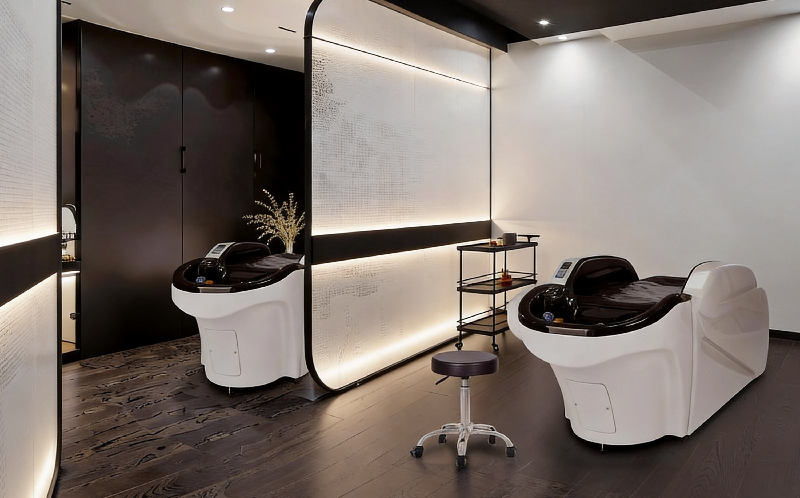
Some shampoo beds have a more integrated one-piece appearance, with a stronger visual impact and a more modern look. These models usually suit stores that want to create a premium, more immersive, or more design-led environment. They are especially suitable for head spa studios, scalp care spaces, and wellness-focused businesses where the equipment itself becomes part of the customer experience. In this type of setting, appearance matters because it supports the service image and helps clients feel that they are entering a more specialized treatment environment.
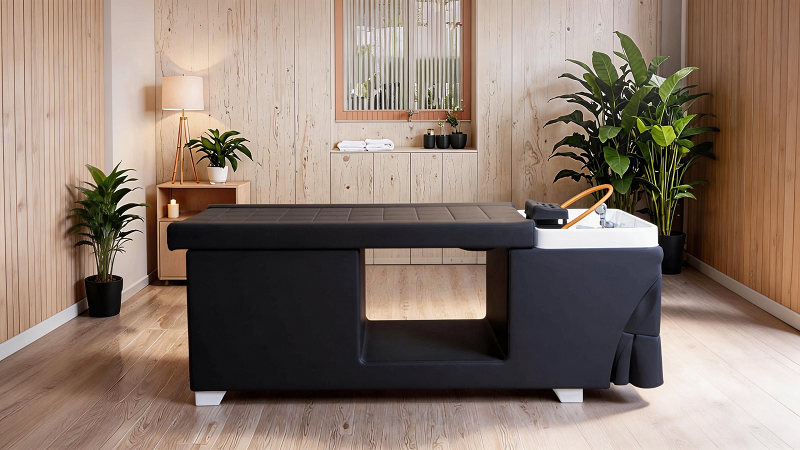
Other shampoo beds are more treatment-bed-oriented in structure. They often look more functional, more direct, and more practical. This type of bed usually works well for businesses that focus on operational use, treatment flow, and cost-performance balance. It can be a better choice for buyers who want flexibility, practicality, and a structure that supports straightforward service delivery.
A simple way to think about it is this:
Choose an integrated, more design-led style if your store positioning is premium, modern, or experience-focused.
Choose a more treatment-oriented style if your business prioritizes practicality, workflow, and functional value.
Do not skip this step. If the overall style does not match your business, even a high configuration may still feel like the wrong choice.
Once the style is right, then it becomes easier to compare which configuration level makes sense within that product direction.
This is the part where many buyers become overwhelmed. Product options often look attractive on paper, but the real issue is not whether a feature exists. The real issue is whether that feature creates value in actual business use.
A basic shampoo bed configuration covers the core washing function. For some businesses, that is already enough. If your service menu is simple, if your treatments are relatively short, or if you are opening a new store and need to control cost carefully, starting with a simpler setup may be the most practical choice. In that case, comfort, stability, and usability matter more than a long list of added functions.
Water circulation is usually one of the first important upgrade points. It gives the service a more treatment-like feeling and helps move the experience beyond simple hair washing. But there is still a difference between single circulation and more advanced circulation systems.
Single water circulation is often suitable for businesses that want to improve the service experience without pushing the budget too far. It works well for stores that want an upgrade from a basic setup but still need to stay cost-conscious.
Three-way or stronger circulation systems are better suited to head spa businesses or stores that want to create a more obvious difference between standard shampoo service and a higher-value treatment experience. This type of feature usually makes more sense when the store is already selling relaxation, scalp care, or wellness-based packages.
Heating is another feature buyers often pay attention to. It can be valuable, but not for every business in the same way. If your treatments are longer, your climate is colder, or your store emphasizes comfort and relaxation, heating can improve the client experience in a noticeable way. But if your services are fast and practical, it may not make enough difference to justify the higher cost.
Steam-related functions can also be useful, but only when they are connected to real service design. They are more suitable for stores that plan to offer scalp care, hair care, or treatment packages that justify a more complete process. If there is no clear plan to build these services into your menu, steam may look impressive at first but bring little operational value later.
The same logic applies to additional options such as scraper-related functions or supportive upgrades. These features are not automatically good or bad. They simply need to match the type of service the business actually intends to deliver.
A common buying mistake is assuming that the fullest configuration must be the best one. That sounds reasonable at first, but in real business operation, it is often not true.
A higher-configuration shampoo bed only becomes worthwhile when the added features are actually used. If the store has a clear service process, trained staff, customers willing to pay for the added experience, and a business model built around higher-value treatments, then the extra investment can make sense. In that situation, upgraded functions are not just “extras.” They help support pricing, customer satisfaction, and store differentiation.
But if the business does not yet have those conditions in place, the opposite can happen. The buyer pays more, but the equipment is underused. Some functions become decoration rather than value. The purchase looks advanced, but it does not improve business performance enough to justify the cost.
That is why the real goal should not be to buy the most complete option. The goal should be to find the most suitable balance between price, functionality, service value, and actual use.
When buyers struggle to choose a shampoo bed configuration, it often helps to step back and ask a few practical questions. These questions usually reveal much more than a product catalog can.
A first-time store owner and an established business usually should not buy in the same way. A new store often needs to control opening costs and focus on equipment that can begin generating value quickly. An existing business upgrading its treatment room may have more flexibility to invest in higher functions because the service model is already proven.
That is why budget should not only be seen as a spending limit. It should also reflect timing. Sometimes the better choice is not the highest specification you can afford, but the one that fits your current business stage most safely.
This question is more important than many buyers realize. If your store mainly provides basic shampooing, straightforward scalp washing, or short relaxation services, a simpler or mid-level configuration may already be enough. But if your store is built around head spa treatments, scalp therapy, or more immersive wellness experiences, then upgraded functions may be part of the service foundation.
In other words, the equipment should follow the service logic, not the other way around.
Different customer groups value different things. Some care most about price and efficiency. Others are willing to pay more for comfort, atmosphere, and a more complete treatment experience. A shampoo bed configuration should reflect that reality.
A useful way to think about it is:
If your customer base is more price-sensitive, keep the setup practical and efficient.
If your customer base expects more comfort and experience, selected upgrades can support higher-value services.
If your store serves a more premium wellness-oriented market, both style and configuration need to support that positioning.
Some stores buy only for their current menu. Others know they plan to add head spa treatments, scalp care packages, or more premium services later. That future plan matters. A configuration that feels slightly more advanced today may be a smart decision if it supports the direction the business is already moving toward.
At the same time, future planning should still be realistic. If those service upgrades are only vague ideas and not part of a real business plan yet, it may be wiser to choose a more practical configuration now and expand later when the demand is clearer.
Even when they are looking at the same shampoo bed, different buyers often need different answers. What works for one group may not be right for another.
For individual salon owners or first-time buyers, the safest approach is often to focus on practicality first. A stable, comfortable, well-built shampoo bed with the right essential functions can be a better investment than a fully loaded version that adds pressure to the opening budget. In the early stage, it is usually more important to make sure the equipment works well every day than to chase features that may not be used consistently.
For head spa studios and treatment-led businesses, the shampoo bed plays a more central role in the value of the service itself. In these businesses, circulation systems, heating, and selected wellness-related upgrades may directly support the service package and help justify higher pricing. A more complete configuration can make good business sense when it is tied to a clear treatment model.
For premium stores, appearance and positioning matter as much as function. Clients notice the equipment immediately. The style of the shampoo bed, the way it fits the room, and the feeling it creates all become part of the brand impression. In this case, choosing only by price or only by function is not enough. The visual language of the bed also needs to match the business.
For distributors and wholesalers, the thinking is different again. They are not choosing one bed for one room. They are thinking about what can sell in different markets. For this reason, it is often more practical to offer a clear product ladder instead of one all-in-one solution, such as:
a basic version for cost-sensitive buyers
a mid-level version for growing salons and project buyers
a higher-level version for premium spaces and experience-led businesses
This type of configuration strategy often works better than trying to push every market toward a fully equipped model.
One of the simplest ways to make a better decision is to separate the purchase into two layers: what your business truly needs, and what may be useful as an upgrade.
The first layer is the non-negotiable part. This includes the style that fits your store, the overall comfort of the bed, the stability of the structure, and the core functions required for the services you already provide. If these basics are wrong, the purchase will not feel right no matter how many optional features are added.
The second layer includes upgrades that can improve treatment value or help the business grow into a more advanced service model. These may include stronger circulation systems, heating, steaming, or other supportive functions. These upgrades can be valuable, but only when there is a clear business reason behind them.
A practical buying mindset often looks like this:
Start with what the business must have
Add features that support real services and real customer needs
Avoid paying for functions that only sound attractive on paper
Think about return on use, not just product specifications
This keeps the decision grounded and makes it easier to choose a configuration that will actually perform well after installation.
There is no universal best shampoo bed configuration. A model that is ideal for a premium head spa may be unnecessary for a practical salon. A version that works well for a first-time store owner may not be strong enough for a distributor targeting multiple market levels. That is why shampoo beds should not be compared only by features or by price. They should be judged by how well they fit the business using them.
For some buyers, the smartest choice is a practical configuration that controls cost and supports daily operation well. For others, it is a more complete setup that strengthens the service experience and supports higher-value treatments. For distributors, the best solution may not be one single version at all, but a clear range of configurations that serve different types of customers.
In the end, real value does not come from buying the most expensive shampoo bed or the one with the longest feature list. It comes from choosing a configuration that fits your budget, your services, your customers, and your long-term business direction. When those parts are aligned, the shampoo bed becomes more than equipment. It becomes a more effective investment.
If you are comparing shampoo bed styles and configurations for your salon, head spa, or local market, Dongpin offers different options to match different business needs. Whether you are planning a new store, upgrading your service room, or selecting models for distribution, our team can help you choose a configuration that fits your budget and service goals more practically.
Not always. It is better only when the added functions match your service model and can be used regularly in real treatments.
Start with your actual business needs. If your services are basic and your budget is tight, a simpler or mid-level version may be enough. If you focus on head spa or premium treatment packages, a more complete configuration may be more suitable.
Both matter, but style should come first. The bed needs to match your store positioning first, then the feature level should be selected based on your services, customers, and budget.


"*" indicates required fields


