

Designing a SPA interior is not just about making the space look calm or luxurious.
The real challenge is creating a space that works well after opening—for clients, for therapists, and for daily operations.
Many SPA owners discover too late that a beautiful space can still feel uncomfortable, inefficient, or hard to manage. This usually isn’t a style problem. It’s a planning and layout problem.
This article focuses on the most practical and low-risk principles for SPA interior planning—ideas that are easy to implement and unlikely to backfire once the business starts running.
Before you choose finishes, lighting, or furniture, get clear on one question:
What experience are you selling—and what should clients feel from minute one?
In practice, most SPAs lean into one of these positioning models:
Relaxation-focused SPA
Clients want decompression. Your space needs softness, quiet, and a slower pace. Comfort and privacy usually matter more than “wow” design moments.
Result-driven / treatment-focused SPA
Clients come for outcomes. The space must communicate cleanliness, precision, and professionalism. Layout should support efficient transitions between steps without feeling rushed.
High-end ritual-based SPA
Clients are buying the process—privacy, details, and a sense of being taken care of. The environment needs controlled lighting, strong acoustics, and full-service “loops” (changing, storage, amenities) inside the experience.
Social / couple-focused SPA
The space should support shared experiences: double rooms, photo-friendly moments, and a welcoming front area that feels like a destination.
This isn’t a branding exercise—it’s a planning tool. Your positioning will directly affect:
Room sizing and room mix (single vs double vs functional rooms)
Lighting levels (bright + clinical vs warm + dim)
Material priorities (durability and easy-clean vs softness and acoustics)
Furniture choices (efficiency-driven vs comfort-driven)
A simple test: if a first-time client walked in, could they immediately understand whether you’re “relaxation,” “results,” or “ritual”? If not, the design may feel nice, but it won’t feel clear—and clarity is what builds trust quickly.
One of the most reliable ways to prevent expensive layout errors is to plan your SPA around three zones and manage three movement lines. This is practical because it forces you to design for real behavior—where people walk, where things get stored, and where the “messy parts” of operations happen.
Front Zone – Trust and First Impression
This includes reception, waiting, consultation, retail display, and brand presence. It should feel welcoming and organized, but also controlled—clients shouldn’t feel like they’re standing in the middle of operations. Make sure you have enough room for:
check-in and payment without blocking traffic
a comfortable waiting moment (even if it’s short)
discreet consultation if your services require it
visible cleanliness and brand cues
Transition Zone – Emotional Decompression
This is the “buffer” between the outside world and the treatment experience: corridors, shoe-changing, scent points, soft lighting changes, and pre-treatment moments. Clients often decide whether your SPA feels premium here—because this is where they stop moving fast and start settling in. A strong transition zone:
reduces noise and visual clutter
slows the pace naturally
creates a feeling of privacy before the room even starts
Service Zone – Experience Delivery
Treatment rooms, shower/changing areas, staff prep zones, and clean/dirty handling. This zone should support:
quiet, privacy, and comfort
fast and consistent room turnover
hidden storage for supplies and linens
easy cleaning and maintenance
Many SPAs under-design the transition zone because it doesn’t “sell” in photos. But in real life, it’s one of the biggest drivers of perceived quality.
Client Line (what clients see and walk through)
Aim for intuitive navigation and minimal crossing with staff activity. Confusion or awkward pass-bys are small stressors that pull clients out of relaxation.
Staff Line (how therapists move)
Keep it short and logical. If staff have to walk far for towels, tools, or products, they’ll either waste time—or start storing items in visible places. That’s how clutter begins.
Material Line (laundry, trash, cleaning, restocking)
This should be hidden as much as possible. Premium SPAs protect the illusion of calm by keeping operational realities out of sight. If clients can see laundry bags, cleaning carts, or supply boxes, the environment instantly feels less refined.
A reliable principle: clients should feel cared for; they shouldn’t feel your logistics.
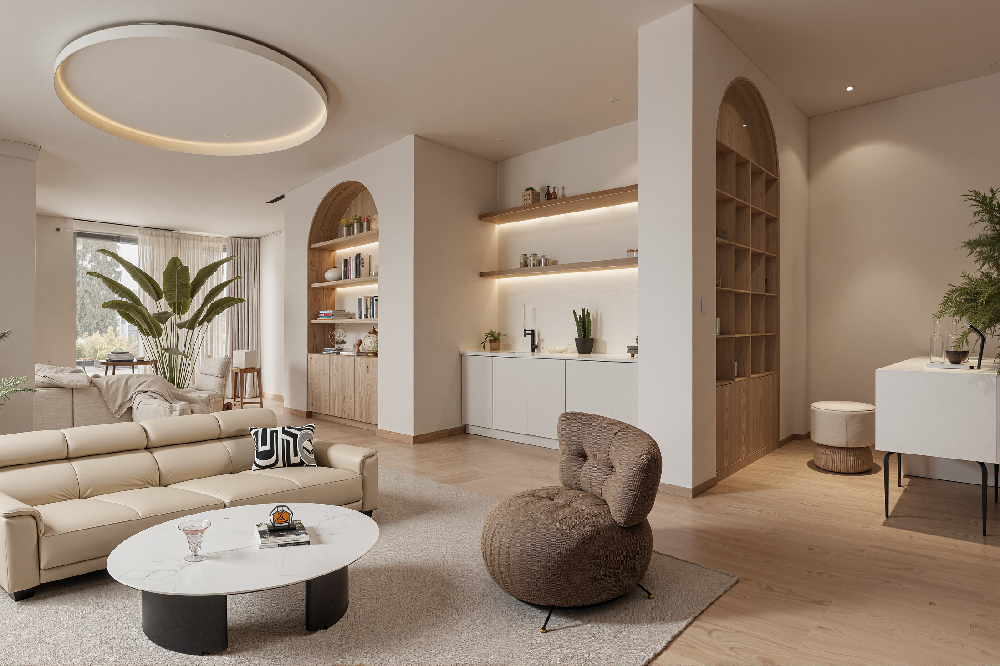
More rooms don’t automatically mean more profit. What matters is whether your rooms match your service menu, staffing, and demand patterns.
A practical, low-risk structure often looks like this:
Single treatment rooms typically deliver the most stable utilization. They’re easier to schedule, easier to staff, and easier to keep consistent. To make single rooms work well:
ensure each room supports your most common services
standardize setup so staff don’t “reinvent” the room each time
build in storage so rooms stay clean even during busy hours
Double rooms can increase average ticket and help marketing (couples, friends, “experience” packages). The risk is underutilization if you build too many. Keep them limited but strong in experience quality:
extra space for movement and privacy
better sound control
thoughtful lighting and seating for shared moments
Head spa, shower/changing, or specialty rooms don’t need to be huge, but they should be complete. A “half-finished” function area often creates friction in the experience. For example:
a changing area without proper hooks/storage becomes messy fast
a head spa area without noise control feels disruptive
a shower area without clear circulation interrupts pacing
High-end SPAs often choose fewer rooms with stronger privacy and full-service loops rather than maximizing room count. That’s a strategic choice that supports pricing power and repeat visits.
In SPAs, the most believable luxury is calm, controlled, and comfortable—not flashy.
A three-layer lighting system is the most reliable approach:
Base lighting for safety and clarity
Reception and corridors should feel clean and readable. Clients want to see that your space is well-maintained.
Ambient lighting for comfort
Warm, indirect light creates a sense of softness and reduces tension. This is where you build emotional calm.
Accent lighting for focus and design
Use it on retail displays, wall textures, wash basins, and key design moments. Accent lighting guides attention and makes the space feel intentional.
Treatment rooms deserve extra care: clients spend most of the session looking upward or closing their eyes. Avoid harsh overhead glare. Indirect or side lighting helps clients relax and helps therapists maintain a comfortable working environment.
A reliable “premium without being fragile” approach:
choose one dominant soft, matte surface to set the tone (wood, micro-cement, textured paint)
use one controlled reflective element for depth (brushed metal, muted mirror, subtle stone texture)
prioritize tactile comfort (upholstery, padded surfaces, quality linens)
Also consider maintenance. A material that looks beautiful but stains easily or shows wear quickly will degrade your brand perception over time. A SPA interior should be designed to look good after 12 months, not just at opening.
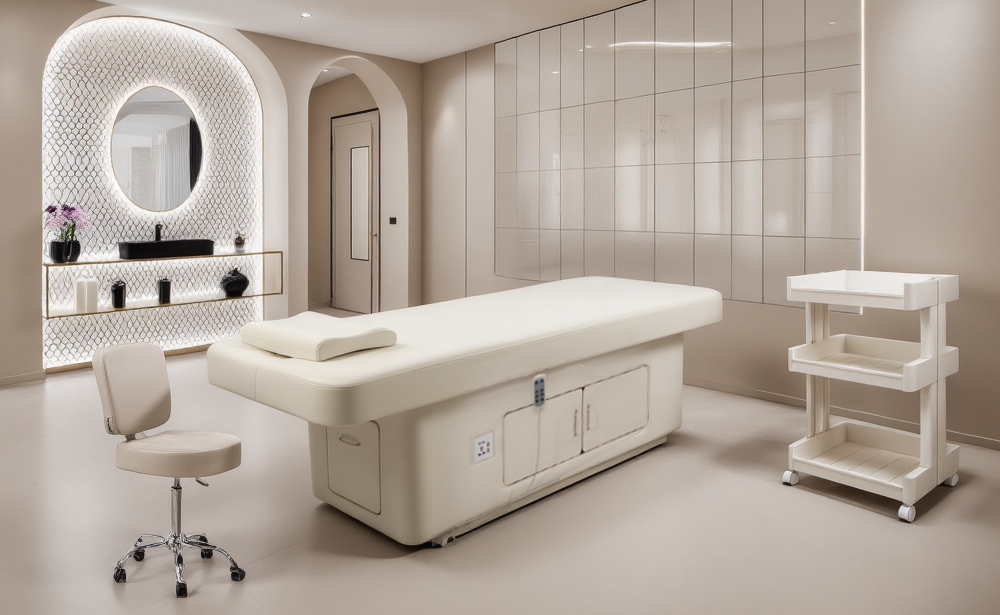
In a SPA, furniture and equipment are part of your service system. When people choose products only for aesthetics, operational problems show up quickly: discomfort, noise, clutter, and slow turnover.
Treatment bed / SPA bed
This is the center of the client experience. Focus on:
comfort and support (especially neck, shoulders, lower back)
stability (no wobble)
quiet adjustment and operation
adjustability that matches your services
Clients may not remember your wall color, but they will remember if the bed felt uncomfortable.
Therapist stool / chair
This impacts staff performance and consistency. Look for:
a usable height range
quiet, smooth wheels (or stable feet depending on flooring)
supportive seating for long sessions
easy-clean surfaces
When therapists are comfortable, service quality improves and staff fatigue drops. That directly affects retention and consistency.
Trolley + storage system
This determines whether your SPA stays clean over time. Strong storage design prevents “surface creep,” where tools and products gradually take over every counter. A good setup:
separates clean vs used items
supports a consistent service flow
hides clutter while keeping essentials within reach
minimizes noise and movement during service
Many “luxury” spaces lose their luxury feel simply because storage wasn’t planned for real usage.
Retail performs best when it feels like a natural continuation of the service—not a sales corner.
Instead of stacking products, group them by experience and purpose, such as:
relaxation and sleep
body care and recovery
scalp and head care
gifts and sets
Then make the display easy to understand: a short explanation, clean grouping, and good lighting. Clients should feel like they’re picking up “something that keeps today going,” not being pushed into buying.
A well-designed retail area can increase average ticket without changing your service menu—because it supports the story clients already believe.
If your SPA is designed thoughtfully, it can be photo-friendly without turning into a “social media set.”
Instead of over-decorating, plan for two or three natural visual moments:
a softly lit brand wall that flatters people on camera
a corridor with depth, texture, and calm lighting
a clean treatment-room corner with balanced light and minimal clutter
The goal is not to chase trends. It’s to create a space that looks consistent, elevated, and believable in real photos taken by real clients.
Subtle spaces often photograph better than busy ones—because the light and composition feel calmer.
Before you finalize your plan, run through this checklist:
reception area too small for peak times
poor sound insulation between rooms
visible restocking or cleaning activity in client areas
mixed color temperatures and inconsistent lighting
overpowering scent systems
noticeable equipment noise during treatment
insufficient storage leading to cluttered counters
unclear wayfinding that makes clients hesitate or get lost
Most of these problems can be prevented early with planning, not necessarily with more budget.
A successful SPA interior isn’t defined by the label of the style. It’s defined by how smoothly the space supports emotion, workflow, and long-term consistency.
If you align your layout (three zones + three lines), your room mix, your lighting/material strategy, and your workflow-driven equipment choices, you create a space that doesn’t just look good on day one—it runs well, feels premium, and earns repeat business.


"*" indicates required fields


