

When choosing Pilates reformers for a studio, the frame material is often one of the first things buyers notice. Wooden reformers tend to create a warmer, more traditional studio atmosphere, while metal reformers usually have a cleaner and more modern appearance.
But the difference is not only visual.
The frame affects the reformer’s weight, rigidity, maintenance requirements, resistance to humidity, ease of movement and even the way the equipment fits into the overall studio design.
For commercial buyers, the better question is not simply “Is wood or metal better?”
It is:
Which frame structure makes more sense for the way your studio operates?
Wooden reformers are commonly made from hardwood or engineered wood structures, while metal reformers generally use aluminum alloy, steel or powder-coated steel profiles.
These materials behave differently.
A solid wood frame usually relies on relatively substantial sections and reinforced joints to maintain rigidity. It also gives the reformer a furniture-like appearance that works naturally in wellness-focused interiors.
Metal frames can achieve similar structural strength with slimmer sections. Aluminum is particularly useful when manufacturers want to reduce equipment weight, while steel can provide greater mass and rigidity but may make the reformer heavier.
It is important not to judge a reformer by the material name alone. A poorly constructed hardwood frame can develop movement around its joints, while a thin or badly welded metal frame may flex during use.
The quality of the structure matters more than whether the catalog simply says “wood” or “metal.”
Dongpin’s current Premium Pilates Core Reformer uses a solid rubber wood frame, combined with carbon-steel springs, stainless-steel hardware and PU silent pulleys. This is a good example of how a wood reformer still relies on multiple materials for its working components.
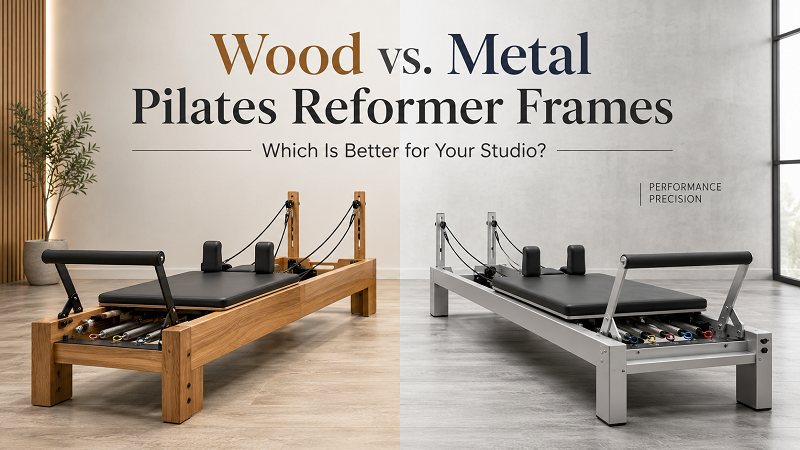
Commercial reformers are exposed to repeated loading during footwork, standing exercises, long-box work and other movements that can place force across the carriage and frame.
A good reformer should feel stable without noticeable twisting, rocking or unwanted movement.
Wooden reformers often feel substantial because the frame itself has more mass. In a fixed studio layout, this can create a reassuring, planted feeling during training.
Metal reformers can also be extremely stable, especially when the frame geometry, welds and rail supports are well engineered. Steel tends to provide more weight, while aluminum can provide rigidity without making the equipment unnecessarily heavy.
For this reason, stability should be evaluated together with the carriage and rail system.
A reformer with a strong frame but poorly aligned rails will still feel unsatisfactory. Likewise, loose rollers or low-quality bearings can create vibration even when the frame itself is rigid.
A more useful comparison looks like this:
| Factor | Wood Frame | Metal Frame |
|---|---|---|
| Typical feel | Solid, traditional | Precise, modern |
| Weight | Usually heavier | Aluminum can be lighter |
| Vibration | Wood can absorb some vibration | Depends on frame geometry |
| Structural joints | Requires good woodworking and reinforcement | Depends on welds and fasteners |
| Best use | Fixed studio layouts | Fixed or flexible layouts |
| Main concern | Moisture and joint quality | Weld quality and surface protection |
There is no automatic winner. A well-built reformer in either material can perform well in a commercial studio.
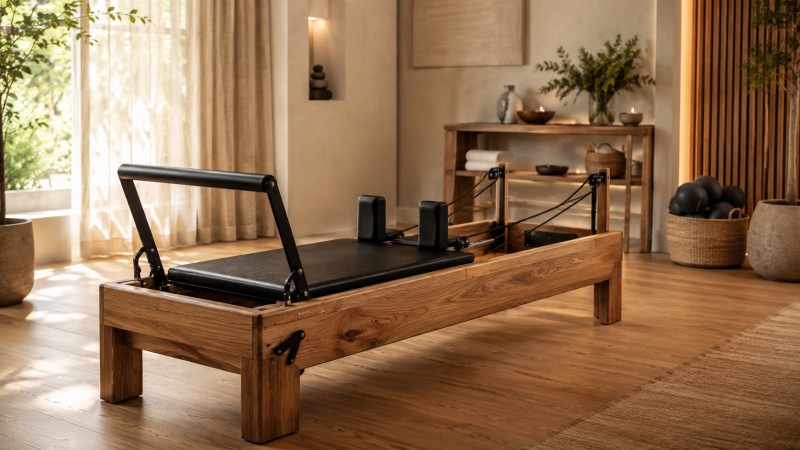
The environment is one area where wood and metal behave differently.
Wood naturally reacts to moisture and changes in humidity. Proper drying, sealing and surface treatment can greatly reduce this effect, but wooden equipment should still be kept away from standing water, direct condensation and large swings in indoor humidity.
This is usually not a major problem in a climate-controlled Pilates studio. However, it becomes more relevant in coastal areas, wellness centers with wet treatment zones or buildings where air conditioning is not consistent.
Metal requires less attention to humidity, especially when aluminum is used.
Steel frames normally rely on powder coating or another protective finish. If that surface is badly damaged and bare steel remains exposed, corrosion can eventually occur.
In practice, both materials can work well indoors. The main difference is that wood benefits from a more controlled environment, while properly finished metal tends to be less sensitive to small changes in humidity.
Cleaning methods also matter. Neither wood nor metal frames should be repeatedly soaked with cleaning solution. The carriage upholstery, ropes, springs and moving hardware normally need more frequent maintenance than the frame itself.
A reformer that stays in the same position for five years does not need the same mobility as one that is moved twice a day.
This is why frame weight should be considered together with the studio layout.
A boutique Pilates studio with eight reformers permanently arranged in rows may actually benefit from heavier equipment. Once positioned correctly, the reformers remain stable and there is little reason to move them except for cleaning or maintenance.
A multipurpose fitness room is different.
If reformers need to be moved aside for yoga, group training or other classes, equipment weight becomes much more important. Aluminum-frame reformers may be easier to handle in this type of environment.
Wooden reformers can still be designed for movement. Dongpin's solid rubber wood reformer, for example, includes removable rollers to help with repositioning and storage.
That illustrates an important point:
Mobility is determined by the complete design, not the frame material alone.
Wheel placement, lifting handles, product length and overall weight all influence how easy the reformer is to move.
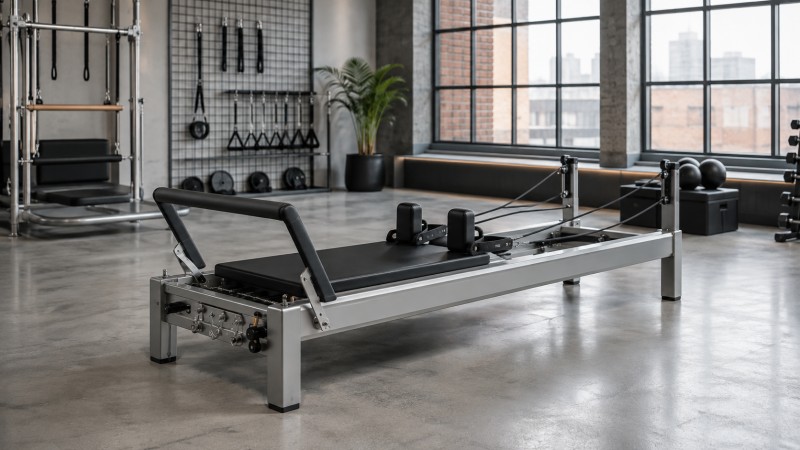
For many Pilates studios, equipment is part of the interior design.
Wooden reformers naturally suit studios built around warm tones, soft lighting, natural textures and wellness-focused branding. They often pair well with wood flooring, linen fabrics, plants and neutral interiors.
This is one reason wood reformers remain popular in boutique and private Pilates studios.
They can also work particularly well in businesses that combine Pilates with physiotherapy, recovery, spa or wellness services because the equipment feels less industrial.
Metal reformers create a different impression.
Black, white or silver metal frames work well in contemporary studios, athletic training spaces and minimalist urban interiors. Their slimmer profiles can make a room feel more technical and streamlined.
Neither style is inherently more premium.
A beautifully finished wood reformer can look luxurious, but so can a precisely engineered aluminum model in a modern studio.
The important thing is consistency. If a studio is purchasing multiple pieces of equipment, matching reformers, chairs and Cadillac tables can create a stronger visual identity than choosing each item independently.
Dongpin’s current Pilates range uses solid rubber wood across several products, including its reformer and other Pilates equipment, which makes it easier to create a coordinated studio environment.
Frame material should be one part of the buying decision rather than the entire decision.
A commercial reformer is a system, and many components will influence the daily experience more than whether the frame is wood or metal.
The carriage should move smoothly without noticeable side play. Rollers and bearings should remain quiet under repeated use. Springs should provide consistent resistance and should be easy to replace when required.
Dongpin's current rubber wood reformer uses PU silent pulleys and carbon-steel springs, illustrating how the operating components are separate from the main wooden structure.
For a studio owner or distributor, several questions are particularly important before placing an order:
How is the frame constructed?
Ask what wood species or metal alloy is being used and how the major joints are reinforced.
How does the carriage move?
Check rail alignment, roller material, bearing quality and carriage noise.
Are replacement parts available?
Springs, straps, ropes, pulleys and rollers will normally require attention before the main frame does.
How will the reformer be delivered?
A heavy wooden frame may affect shipping cost, unloading and installation, while a knock-down metal structure may reduce freight volume but require more assembly.
For commercial projects involving six, eight or twelve reformers, these details can have a much larger financial impact than the difference between wood and metal itself.
The answer depends on the studio.
A wooden reformer tends to make more sense when the equipment will remain in a fixed layout and the studio wants a warmer, furniture-like appearance.
A metal reformer may be more practical when the equipment needs to move frequently or when the studio prefers a modern, athletic aesthetic.
For a boutique wellness-oriented studio, the solid rubber wood approach used in Dongpin's current reformer range fits naturally with the surrounding interior.
For a high-capacity multifunctional fitness space, a lighter aluminum system might be easier to reorganize.
The key is to match the equipment to the business model rather than choosing a material because it appears more premium.
Not necessarily. Wood reformers often feel very solid because of their mass, but a well-engineered metal frame can provide equally good stability. Frame geometry, joints, rails and overall construction matter more than the material alone.
Metal generally requires less attention to humidity, particularly aluminum. However, most routine reformer maintenance involves springs, ropes, pulleys, upholstery and carriage components rather than the main frame.
Wood can react to moisture and large changes in humidity. Proper drying, structural design and protective finishing help reduce this risk. A stable indoor environment is recommended.
No. Aluminum reformers can be relatively lightweight, but steel-frame equipment may still be heavy. Compare the actual product weight rather than assuming all metal reformers are lighter.
Wood is often a strong choice for boutique studios that want a warm, natural or wellness-focused atmosphere. Metal may be more suitable for modern, minimalist or performance-oriented spaces.
Both can be suitable. For high-volume use, focus on structural rigidity, carriage quality, spring durability, replacement parts and serviceability rather than frame material alone.
Dongpin's current Premium Pilates Core Reformer uses a solid rubber wood frame, combined with carbon-steel springs, stainless-steel hardware and PU silent pulleys.
Wood and metal reformers solve the same basic problem in different ways.
Wood offers a substantial feel and a warmer visual character. Metal can offer slimmer structures, easier mobility and a more contemporary appearance.
But frame material alone does not determine whether a reformer is suitable for a professional studio.
For a commercial purchase, the more useful evaluation is:
Frame construction → carriage movement → spring system → adjustment hardware → replacement parts → shipping and installation.
If those elements are well designed, either material can become a reliable studio investment.
For studios already leaning toward a warm, natural and wellness-focused interior, a solid wood reformer can provide both the training function and the visual consistency needed to build a more distinctive Pilates space.


"*" indicates required fields


